Business Communication for the Modern Workplace
"Clarity is respect. In modern workplaces, how we communicate is how we lead.” Coursera
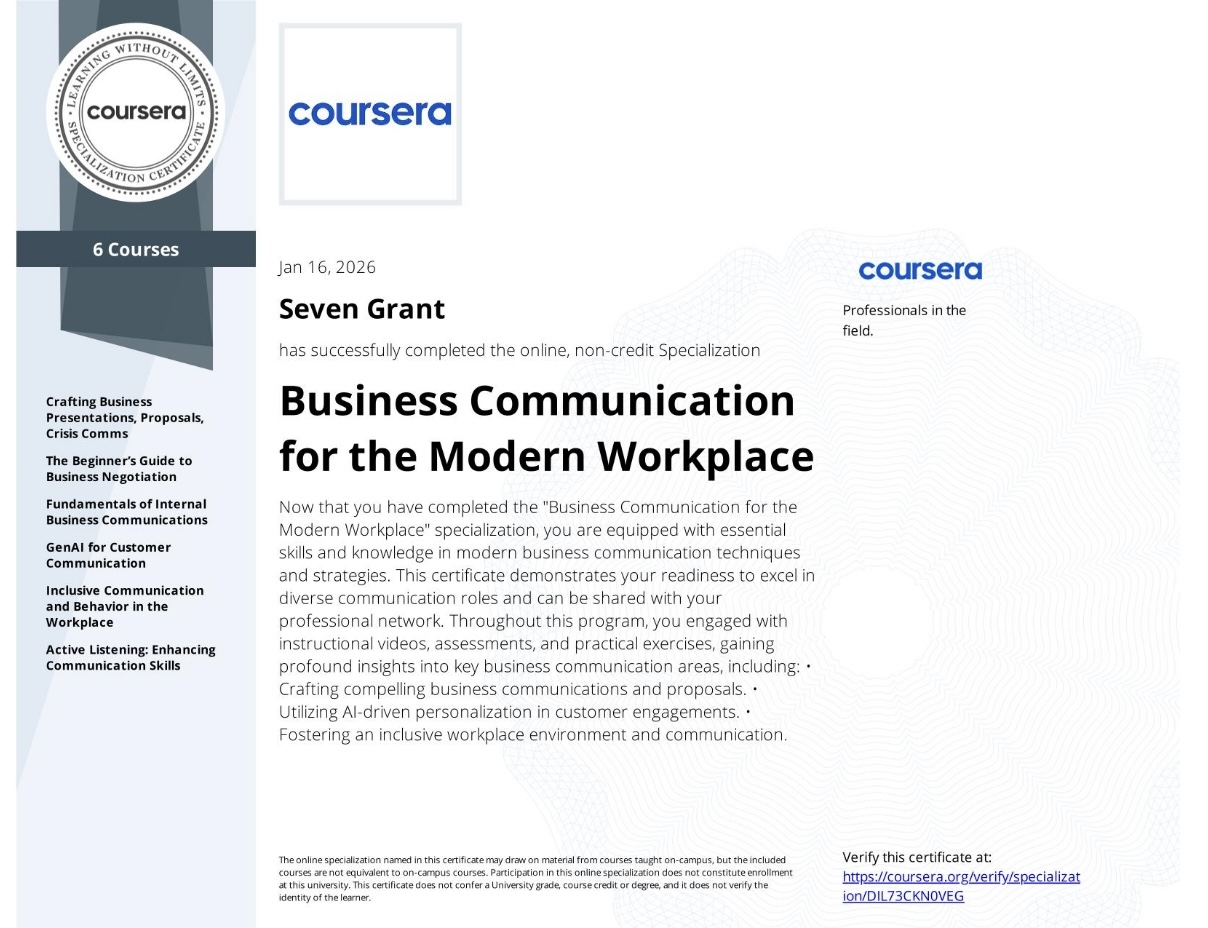
Completed by: Seven Grant
Completion Date: January 15, 2026
Time Commitment: Approximately 1 month at 10 hours per week
Platform: Coursera
Course Description
A comprehensive program covering modern business communication across presentations, negotiation, internal communications, GenAI-enabled customer engagement, inclusivity, and active listening. The course emphasizes clarity, ethical AI use, stakeholder alignment, and inclusive workplace practices as core business competencies.
Crafting Business Presentations, Proposals, and Crisis Communications
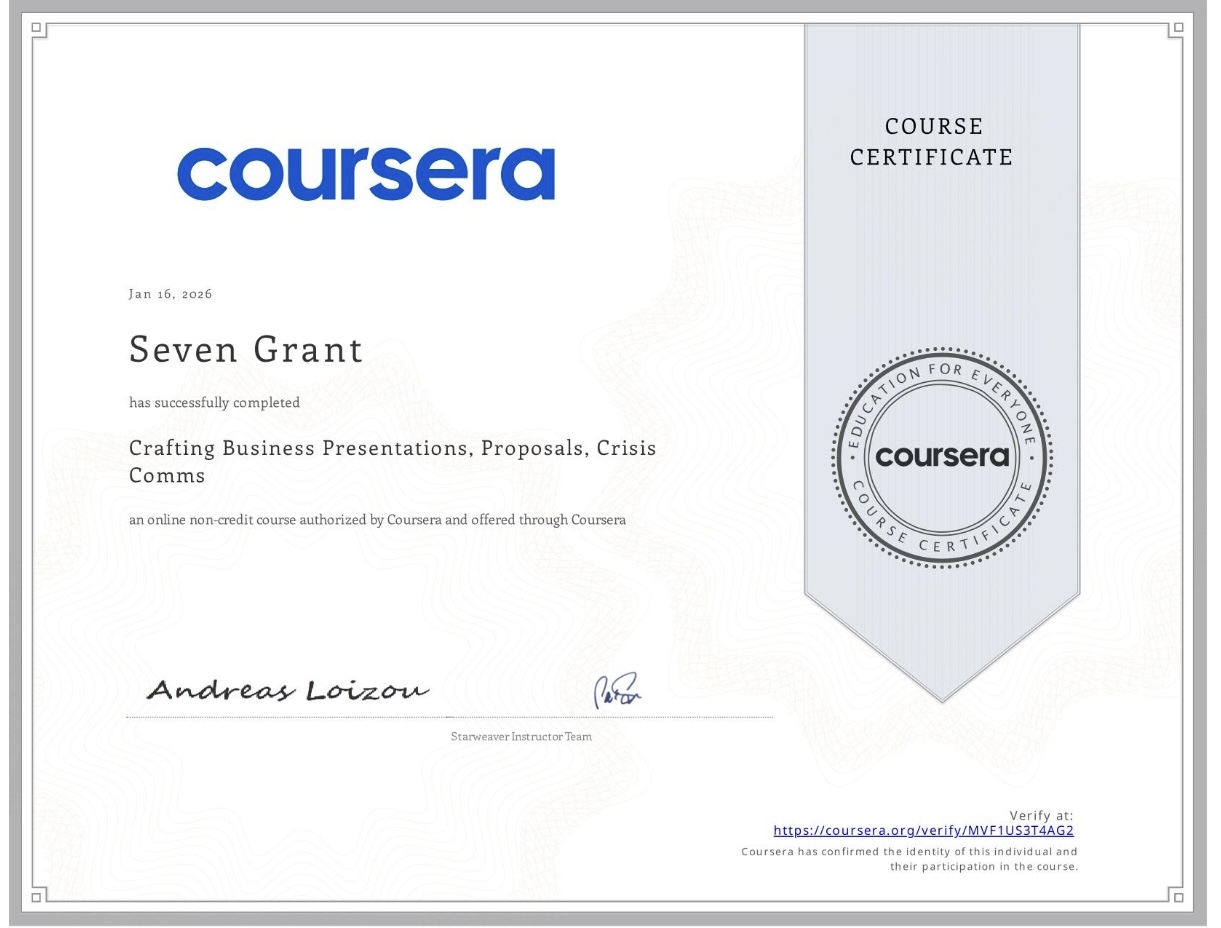
Score: 100%
Duration: 1 hour
Description:
Focused on structuring persuasive presentations and proposals while managing high-stakes crisis communication. Emphasized message hierarchy, audience framing, and transparency under pressure.
Notes:
Strengthened skills in concise storytelling, value-based proposals, and calm, credible crisis response.
The Beginner’s Guide to Business Negotiation
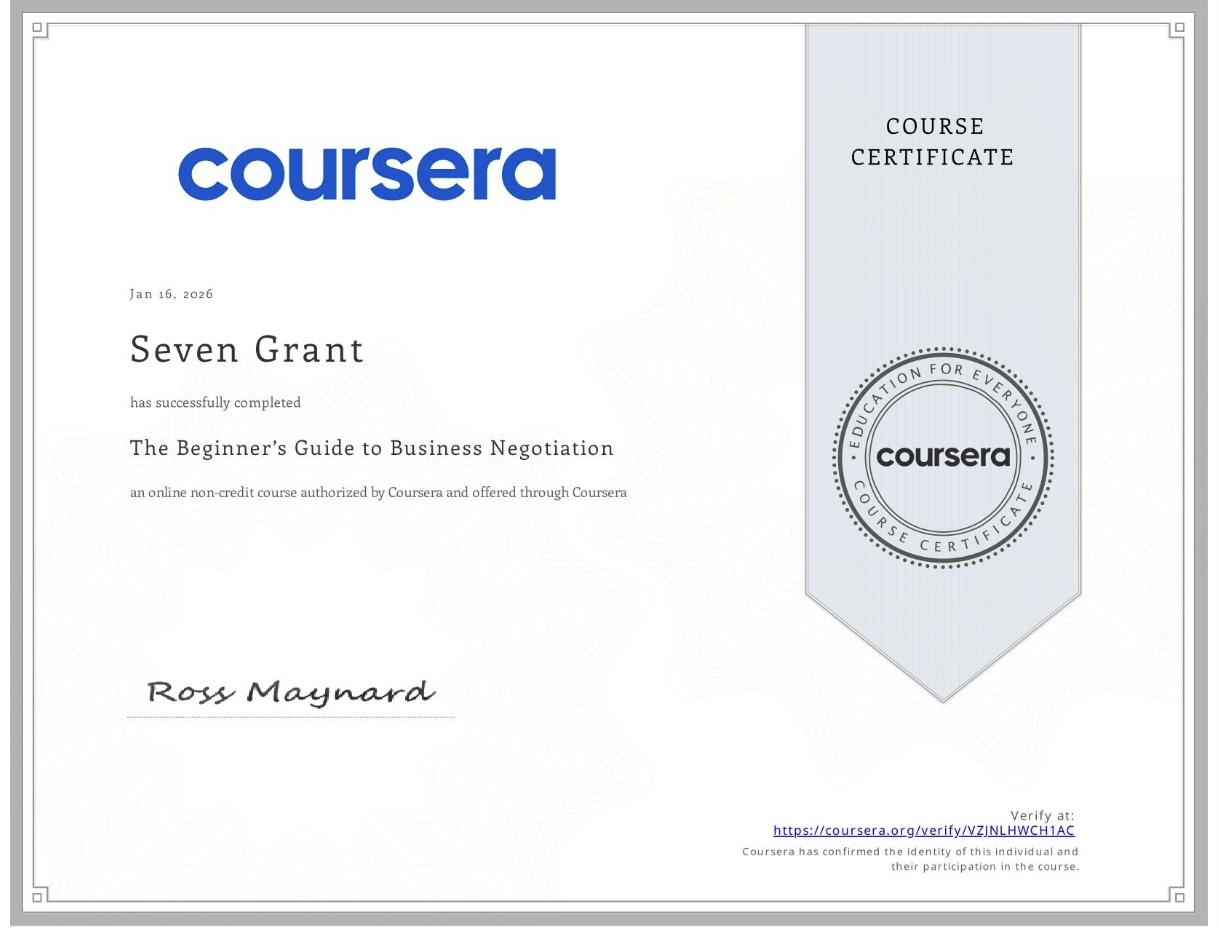
Score: 100%
Duration: 1 hour
Description:
Introduced principled negotiation techniques, preparation frameworks, and collaborative problem-solving strategies applicable to everyday business interactions.
Notes:
Reinforced negotiation as alignment-building rather than adversarial exchange.
Fundamentals of Internal Business Communications
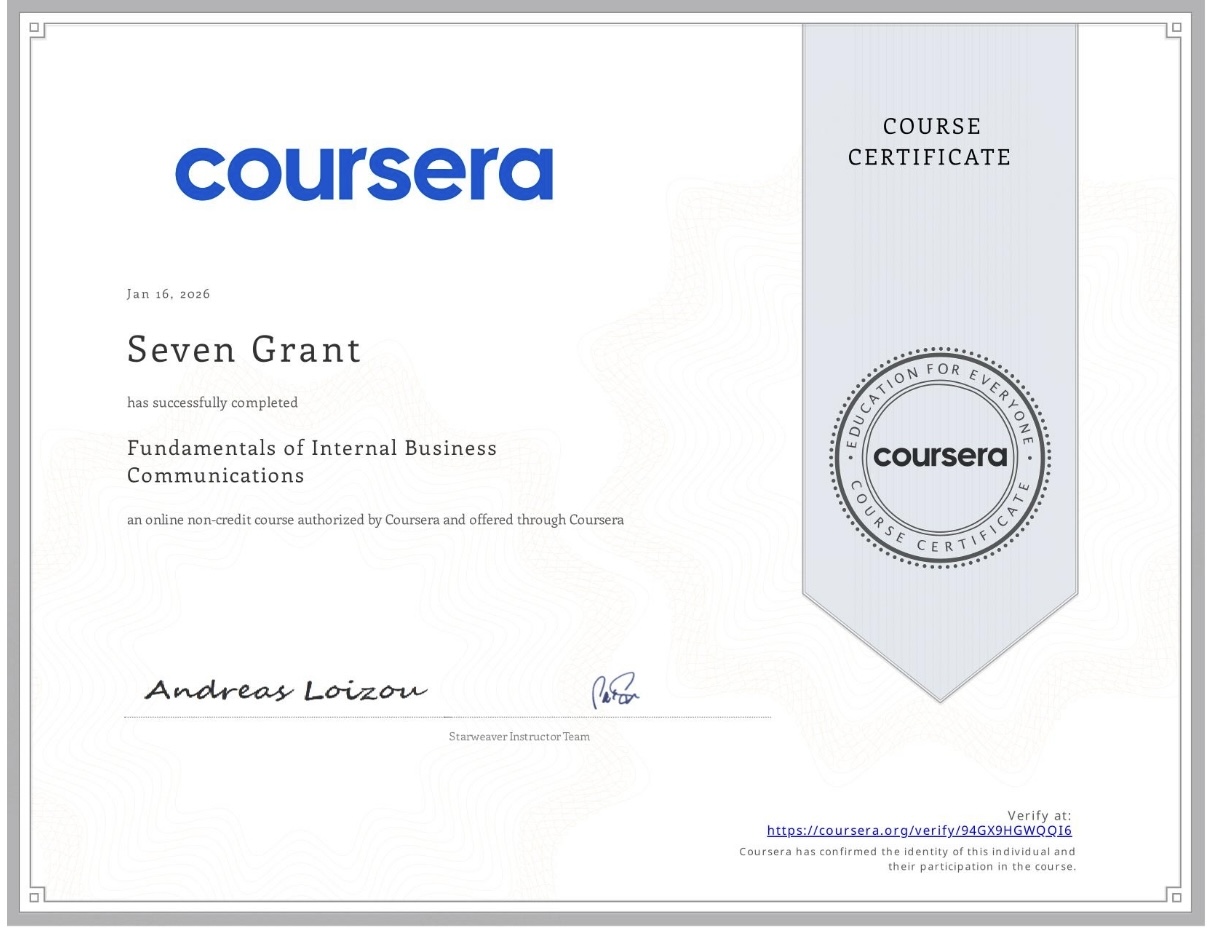
Score: 100%
Duration: 1 hour
Description:
Explored how internal communication systems influence culture, performance, and engagement. Covered message consistency, leadership communication, and feedback loops.
Notes:
Highlighted the operational impact of clear, timely, and structured internal messaging.
GenAI for Customer Communication
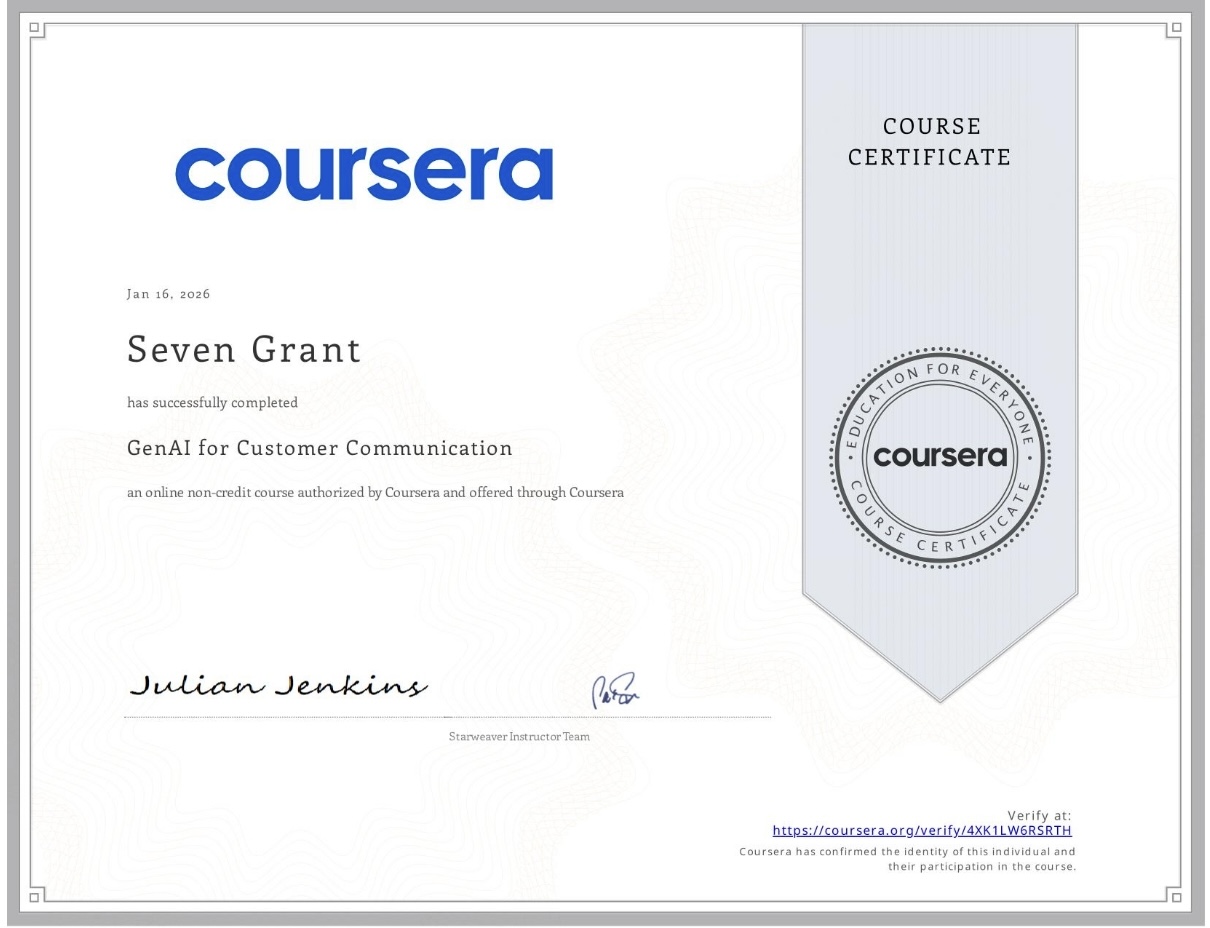
Score: 80%
Duration: 3 hours
Description:
Examined the use of generative AI to personalize customer communication at scale, including ethical considerations, accuracy risks, and human-in-the-loop design.
Notes:
Improved understanding of balancing automation with empathy and accountability.
Inclusive Communication and Behavior in the Workplace
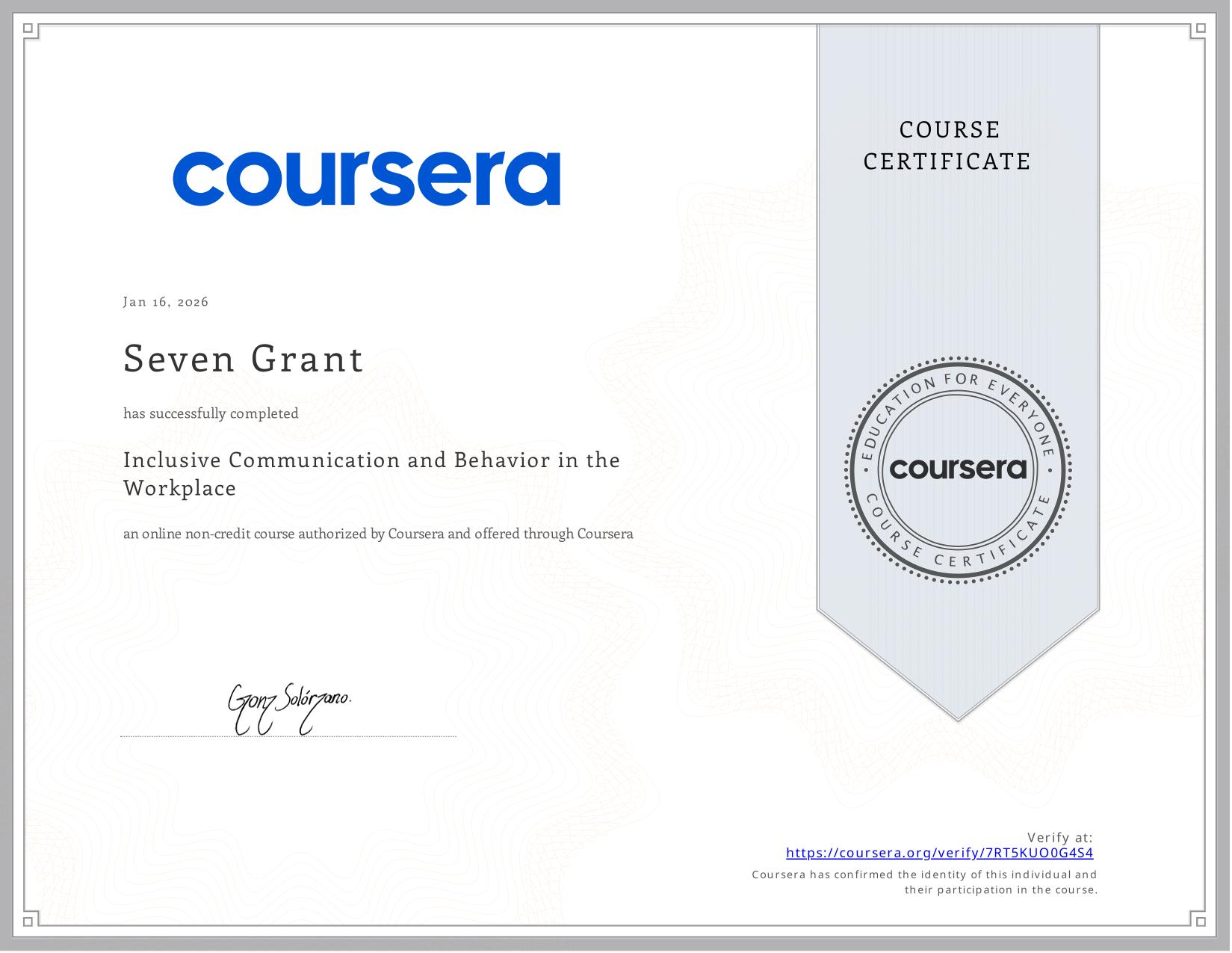
Score: 85%
Duration: 100 minutes
Description:
Focused on recognizing bias, fostering inclusive language, and creating psychologically safe communication environments across diverse teams.
Notes:
Emphasized inclusivity as a practical communication skill, not a symbolic gesture.
Active Listening: Enhancing Communication Skills
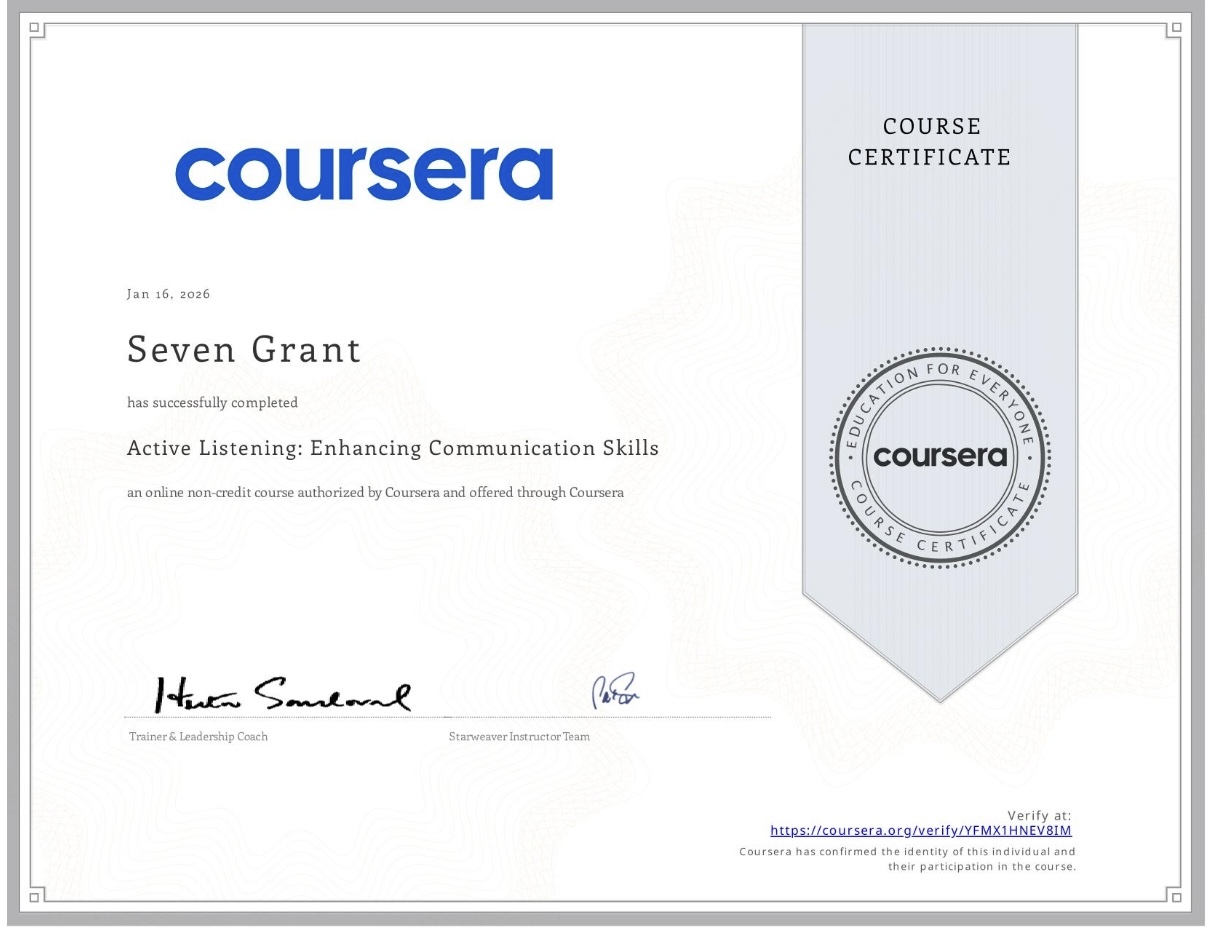
Score: 100%
Duration: 90 minutes
Description:
Developed advanced listening techniques to improve understanding, reduce conflict, and strengthen professional relationships.
Notes:
Confirmed active listening as a high-impact skill for leadership, negotiation, and trust-building.
Takeaways
1. Business communication is a leadership skill, not a soft skill.
2. Clear structure increases trust and decision speed.
3. Intent does not matter if impact is misaligned.
4. Audience analysis precedes message design.
5. Brevity is strategic, not dismissive.
6. Proposals succeed when they frame value, not effort.
7. Crisis communication prioritizes transparency over perfection.
8. Silence is also a message—often a costly one.
9. AI personalization scales empathy when used ethically.
10. GenAI is an assistant, not a replacement for judgment.
11. Data without narrative rarely persuades.
12. Internal communication shapes culture faster than policy.
13. Inclusive language reduces friction and increases participation.
14. Psychological safety improves message uptake.
15. Active listening is the fastest credibility builder.
16. Listening to understand differs from listening to reply.
17. Negotiation is collaborative problem-solving, not dominance.
18. Preparation defines negotiation outcomes more than charisma.
19. Stakeholder mapping prevents communication blind spots.
20. Tone consistency reinforces brand integrity.
21. Emotional regulation is foundational in high-stakes dialogue.
22. Feedback should be actionable, timely, and specific.
23. Assumptions erode alignment faster than mistakes.
24. Questions outperform statements in complex discussions.
25. Communication failures are usually system failures.
26. Inclusivity is operational, not performative.
27. Good communication reduces rework, conflict, and burnout.
Completing Business Communication for the Modern Workplace reinforced that communication is an execution discipline. Across presentations, negotiations, GenAI use, and inclusivity, the common thread was intentionality—choosing structure, tone, and tools deliberately. The course reframed communication as a measurable driver of outcomes: trust, clarity, alignment, and speed. Most importantly, it emphasized that modern communicators must balance efficiency with empathy, and technology with human judgment.


Comments
Post a Comment