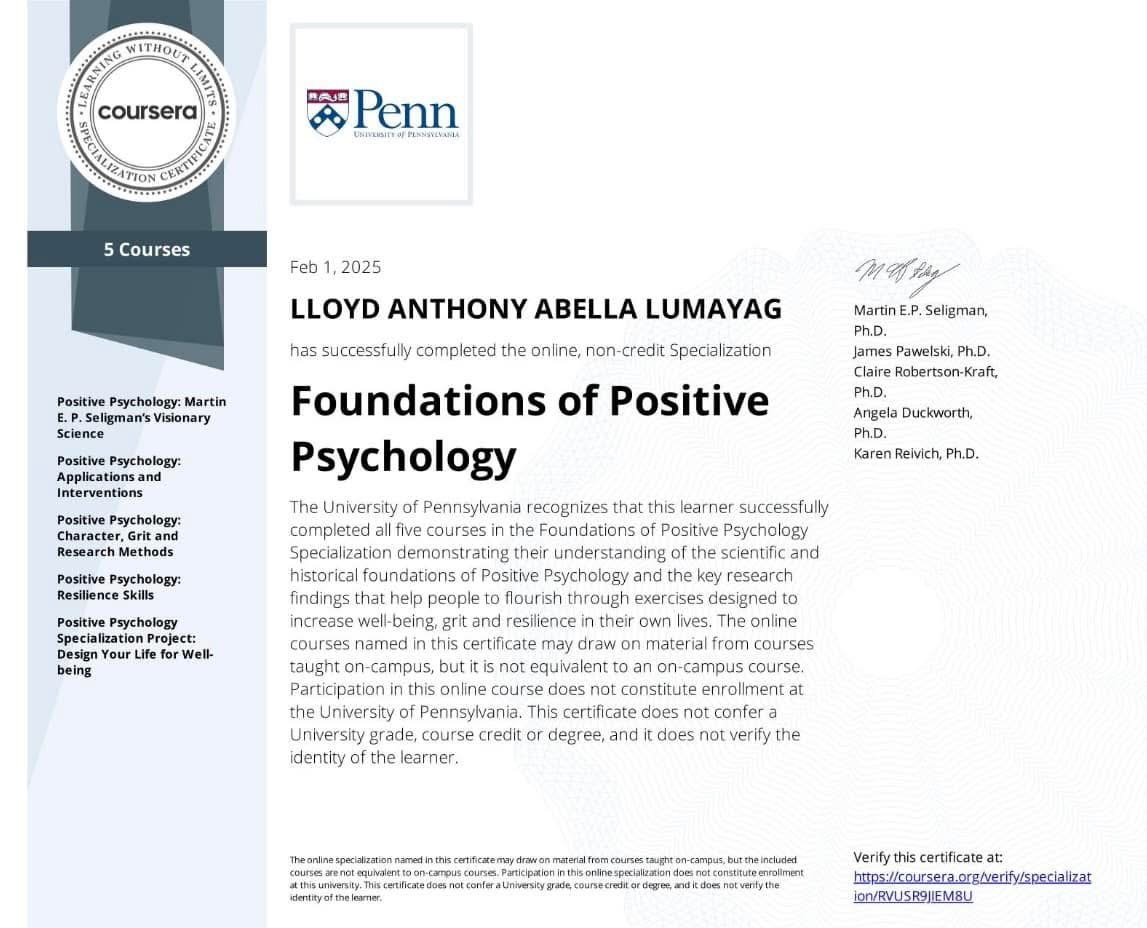
Foundations of Positive Psychology Specialization
“Well-being is not the absence of suffering, but the presence of meaning, agency, and resilience.”
University of Pennsylvania
Foundations of Positive Psychology Specialization
Completed by: Seven Grant
Completion Date: February 1, 2025
Duration: Approximately 2 months at 10 hours per week
Notes: First completed in 2023; knowledge refreshed and re-integrated in 2025
This five-course specialization provides a rigorous, evidence-based foundation in positive psychology, integrating theory, research, and applied interventions to enhance well-being, resilience, and human flourishing.
Courses Completed
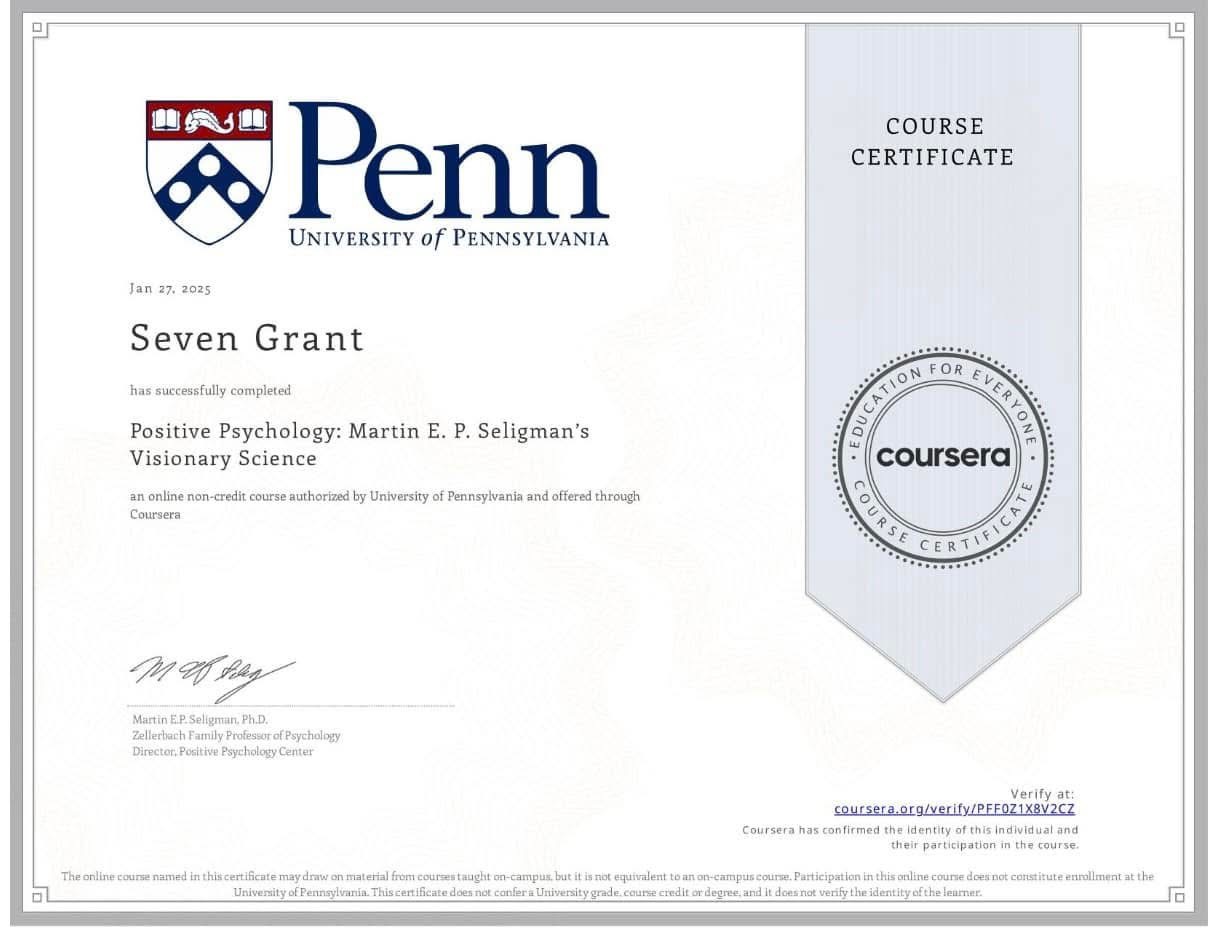
Positive Psychology: Martin E. P. Seligman’s Visionary Science
Instructor: Dr. Martin E. P. Seligman
Grade: 99%
Key Takeaways:
- Foundations of positive psychology as a scientific discipline
- PERMA model: Positive emotion, Engagement, Relationships, Meaning, Accomplishment
- Distinction between pleasure, engagement, and meaning
- Learned optimism versus learned helplessness
- Role of explanatory styles in mental health
- Measurement of well-being beyond pathology
- Flourishing as a measurable outcome
- Strength-based rather than deficit-based frameworks
- Limits of happiness as a sole metric
- Long-term impact of meaning on life satisfaction
- Cultural considerations in well-being research
- Ethics of positive psychology interventions
- Future directions of the field
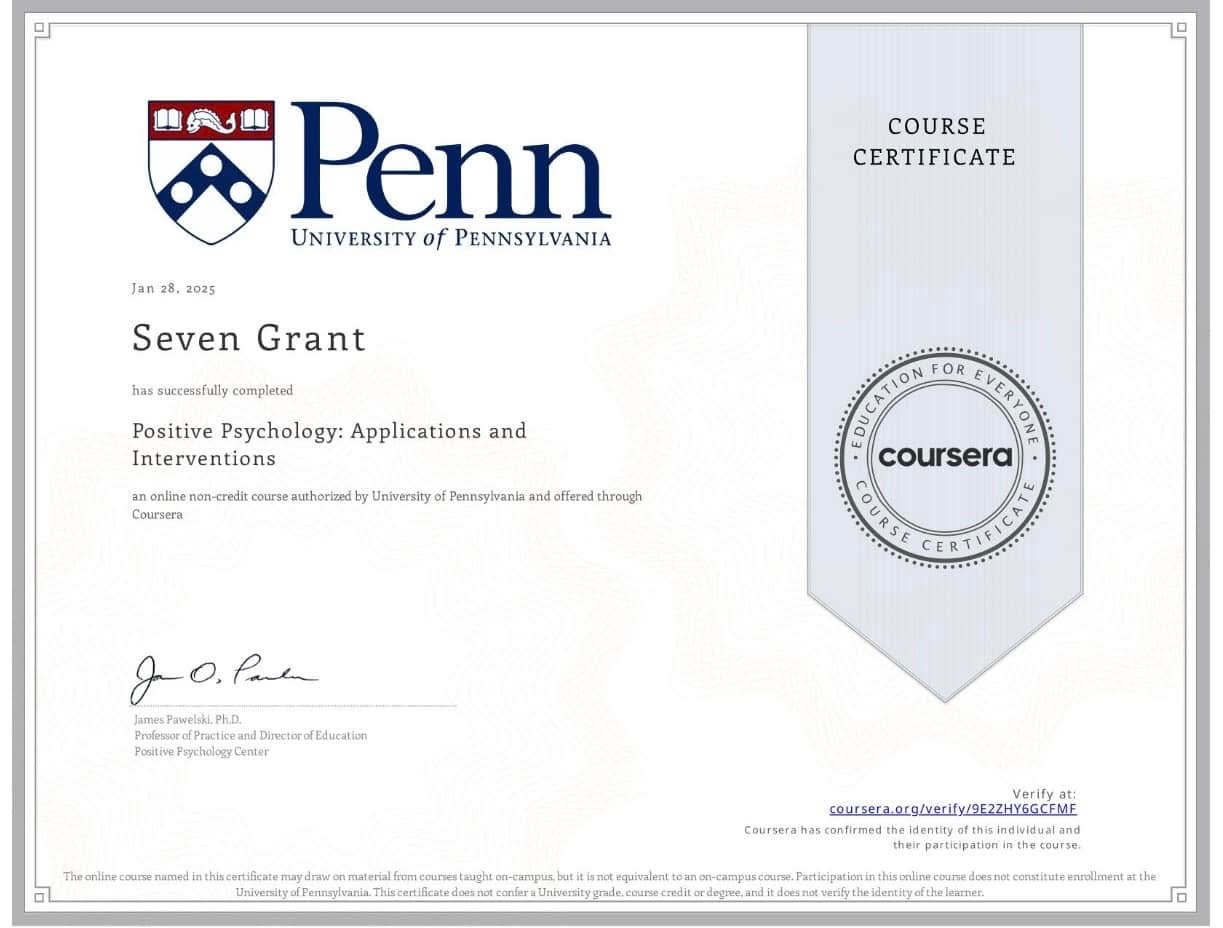
Positive Psychology: Applications and Interventions
Instructor: Dr. James Pawelski
Grade: 100%
Key Takeaways:
- Designing evidence-based positive interventions
- Gratitude practices and their neurological impact
- Savoring and attentional training
- Strengths identification and application
- Habit formation for sustainable well-being
- Balancing authenticity with optimism
- Avoiding toxic positivity
- Measuring intervention effectiveness
- Context-sensitive application of tools
- Workplace and organizational well-being strategies
- Self-compassion as a resilience tool
- Well-being across the lifespan
- Integration of ethics into applied practice
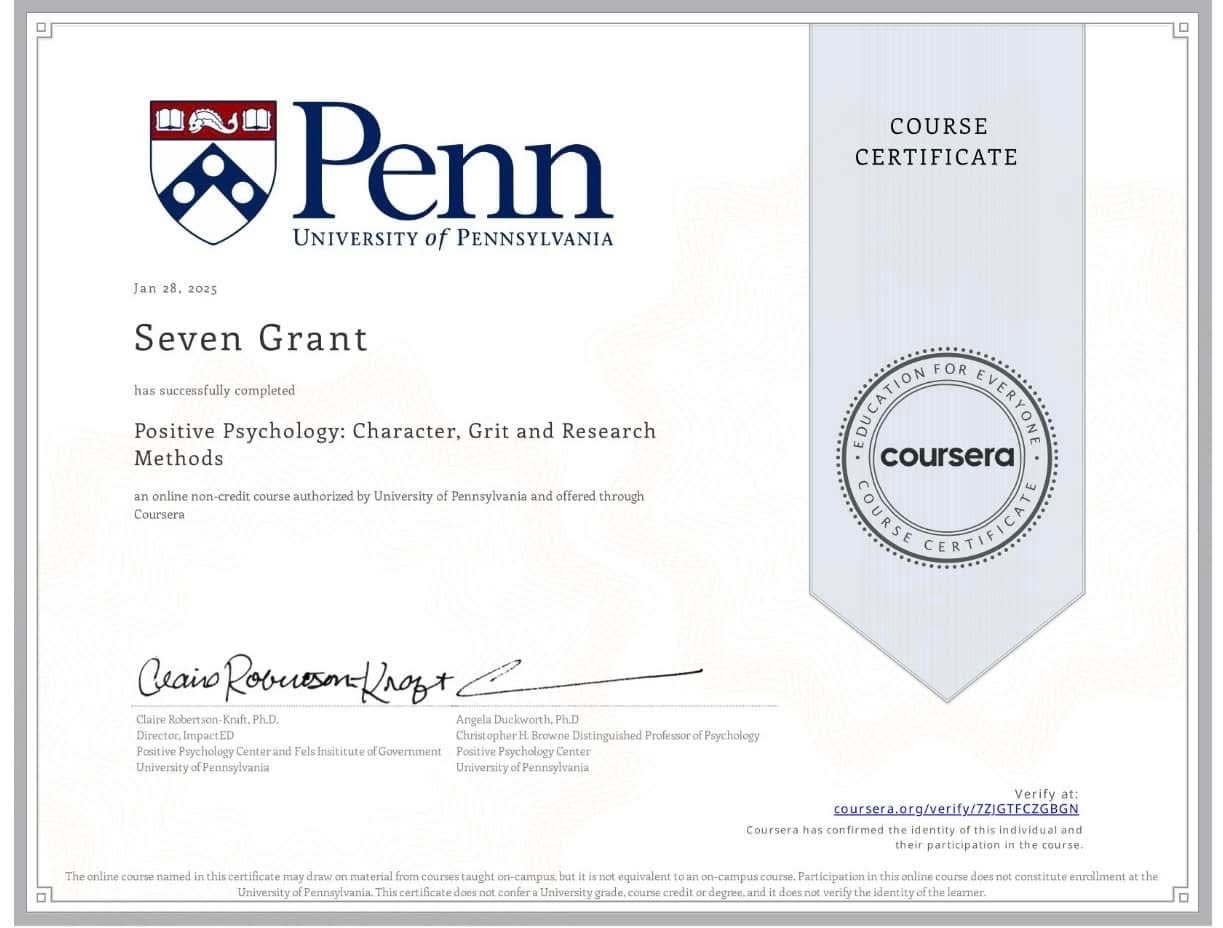
Positive Psychology: Character, Grit, and Research Methods
Instructors: Dr. Angela Duckworth, Dr. Claire Robertson-Kraft
Grade: 100%
Key Takeaways:
- Character strengths classification and usage
- Grit as perseverance plus passion over time
- Difference between talent and sustained effort
- Predictors of long-term achievement
- Research design and validity in psychology
- Interpreting quantitative and qualitative data
- Longitudinal versus cross-sectional studies
- Bias and limitations in behavioral research
- Measurement challenges in character science
- Growth versus fixed mindset implications
- Role of deliberate practice
- Ethical research considerations
- Translating research into real-world policy
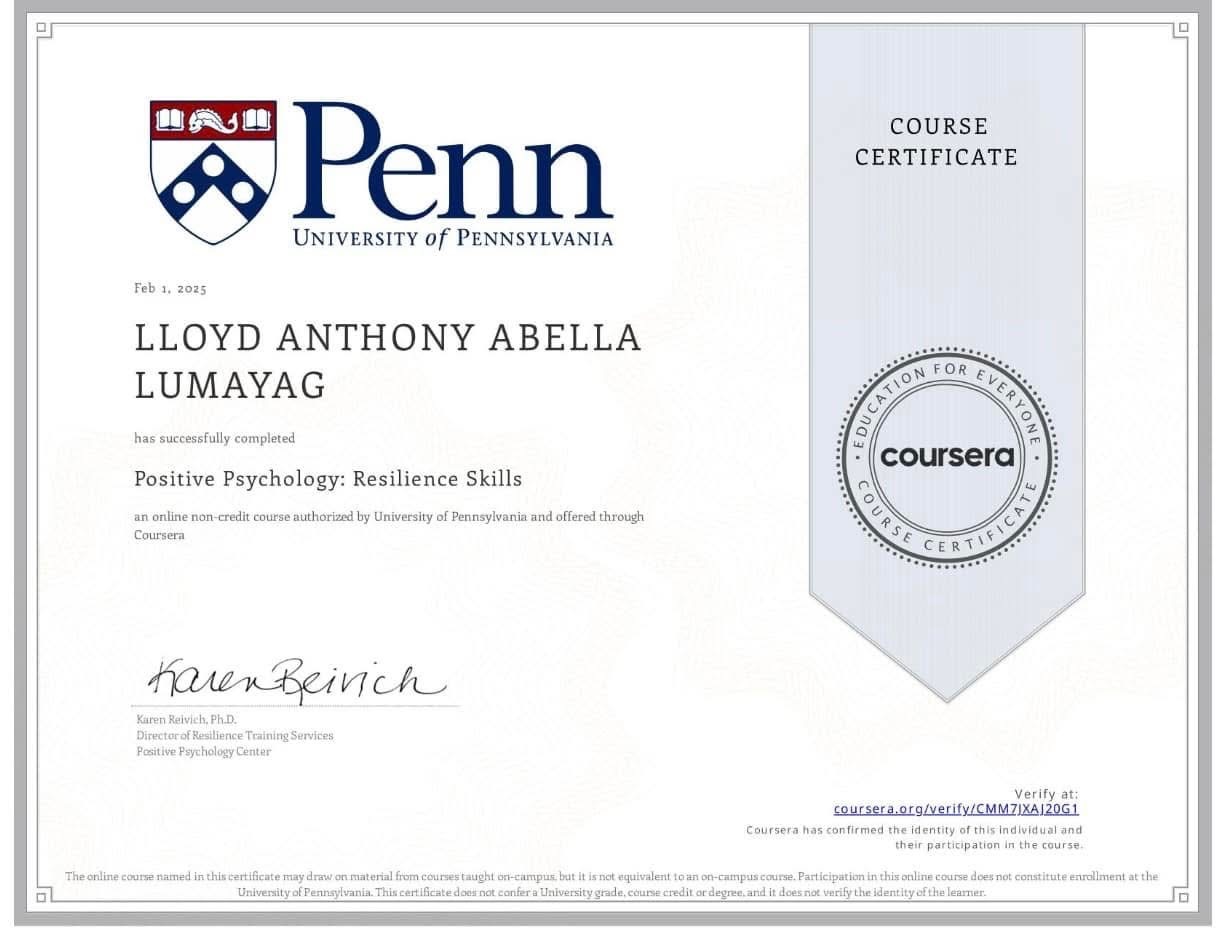
Positive Psychology: Resilience Skills
Instructor: Dr. Karen Reivich
Grade: 100%
Key Takeaways:
- Cognitive behavioral foundations of resilience
- Identifying and disputing thinking traps
- Emotional regulation under stress
- ABC model (Adversity, Beliefs, Consequences)
- Energy management and recovery
- Strengthening psychological flexibility
- Coping versus adapting
- Building resilience under chronic stress
- Social support as a buffer
- Post-traumatic growth principles
- Preventing burnout and compassion fatigue
- Resilience in high-pressure environments
- Teaching resilience without invalidating pain
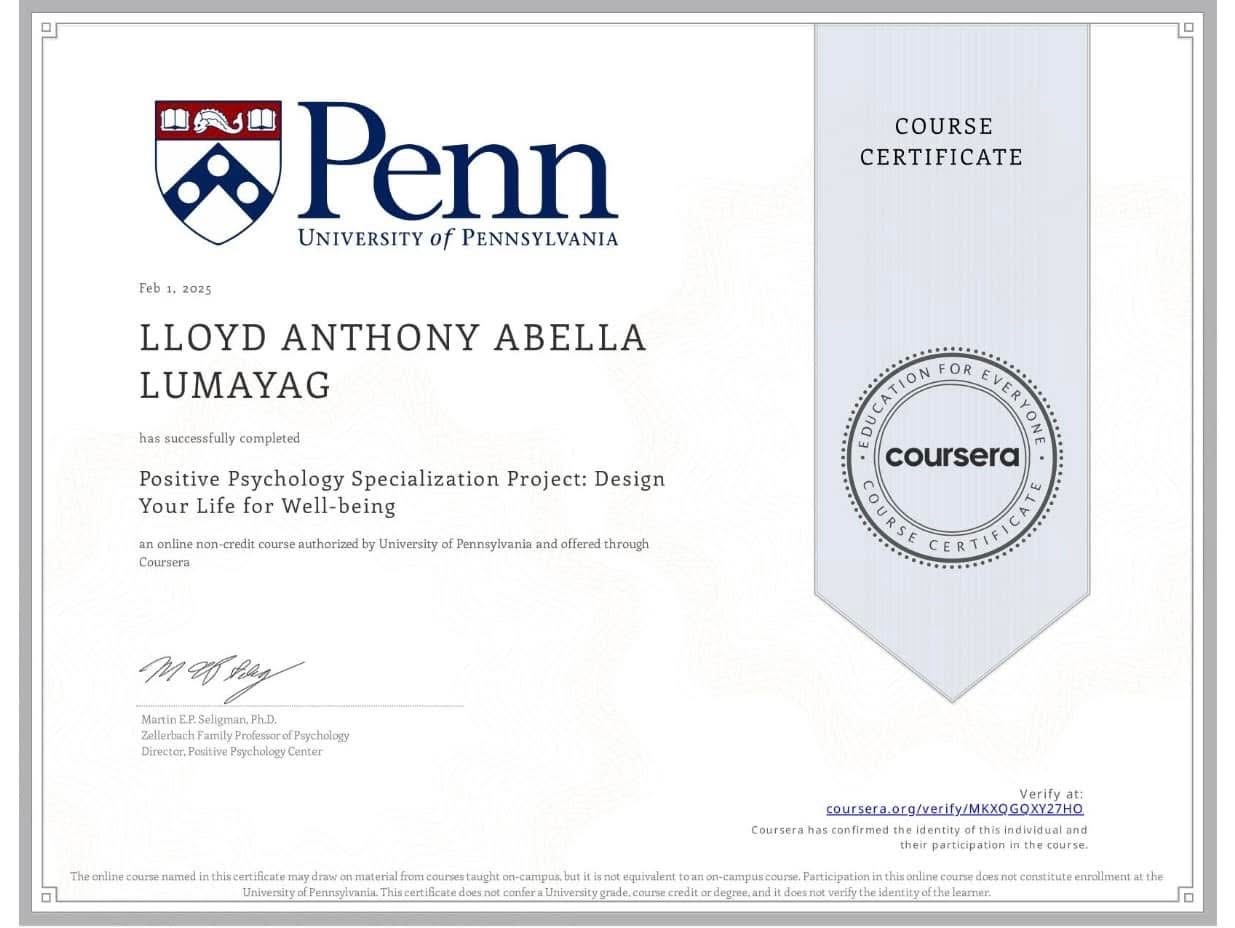
Positive Psychology Specialization Project: Design Your Life for Well-being
Grade: 99%
Key Takeaways:
- Systems thinking applied to personal well-being
- Designing personalized positive interventions
- Hypothesis-driven self-experimentation
- Data-informed self-reflection
- Feedback loops for continuous improvement
- Balancing ambition with sustainability
- Values alignment and life design
- Evaluating short-term versus long-term outcomes
- Integrating multiple well-being domains
- Ethical self-intervention design
- Measuring subjective and objective outcomes
- Iterative refinement of life strategies
- Translating theory into lived practice
Integrative Reflection
As a cat parent, this specialization sharpened my understanding of attunement, routine, and non-verbal regulation. Caregiving—across species—reinforces the role of consistency, safety, and presence in emotional well-being.
Through a holistic wellness lens, the program validated that mental health is inseparable from physical regulation, social connection, purpose, and rest. Well-being is cumulative, not episodic.
From a cumulative trauma and resilience model, the coursework affirmed that resilience is not an innate trait but a set of skills developed under pressure. Chronic adversity reshapes perception, but it also strengthens pattern recognition, emotional literacy, and adaptive capacity when supported by evidence-based tools.
As a trans woman and emerging actress, positive psychology offered language and structure to experiences often lived without validation. The emphasis on meaning, agency, and character reframes survival into authorship—moving from endurance to intentional self-construction. Performance, identity, and authenticity intersect not as contradictions, but as disciplined expressions of self.
This specialization was not just academic—it was integrative, corrective, and grounding.


Comments
Post a Comment